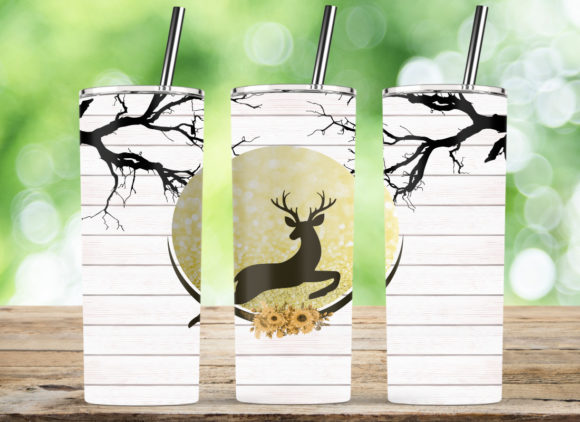
Deer Moon Flower 20 Oz Tumbler Wrap
A Designer’s First Glance: Quiet Magic, Not Clutter
Opening Deer Moon Flower 20 Oz Tumbler Wrap feels like unrolling a sketch from a late-night journal—soft, intentional, and gently atmospheric. It’s not loud or trend-chasing. The deer silhouette anchors the composition with quiet dignity; the crescent moon curves just above it, cradling delicate floral motifs that bloom outward like breath. There’s no forced symmetry, no over-rendered detail—just balanced negative space and organic flow. As an embroidery designer who’s stitched hundreds of nature-themed pieces for boutique clients and Etsy shops, I immediately sensed this wasn’t made for mass-market iron-ons. It’s built for *presence*: the kind you notice when someone lifts their tumbler at a farmers’ market, or when a new mom unfolds a custom-embroidered baby blanket and pauses mid-fold.
Where This Design Truly Lives—in Real Embroidery Projects
I tested Deer Moon Flower 20 Oz Tumbler Wrap as the centerpiece on a heavyweight organic cotton tote—no tumbler, no wrap, just raw application. Why? Because real-world use rarely matches the product title exactly. On the tote, it stitched cleanly at 4.5” wide using standard fill and satin stitch transitions. The antlers held definition without fraying; the moon’s curve stayed smooth, not pixelated. That tells me the PNG has clean edges and thoughtful simplification—critical for machine embroidery design where jagged vectors translate to skipped stitches or thread breaks.
It also worked beautifully on a relaxed-fit crewneck sweatshirt—medium-weight fleece, tear-away stabilizer underneath. No puckering. No distortion. The design’s moderate stitch density let the fabric breathe, and the floral accents read clearly even at 3.75”. That makes it reliable for sweatshirt embroidery, baby embroidery (think onesies or burp cloths), and holiday embroidery like linen tea towels or nursery decor pillows. For craft business owners, it’s a quiet upgrade from generic florals—it adds narrative without demanding attention.
Where to Pause—and Why
This isn’t a one-size-fits-all embroidery file. Its charm lives in its subtlety, so it needs thoughtful placement. Avoid using Deer Moon Flower 20 Oz Tumbler Wrap on:
- Stretchy fabrics without cutaway + topping stabilizer—the delicate stems and fine moon outline can distort under tension;
- Thin or sheer fabrics like voile or lightweight rayon—stitch density may show through or cause shadowing;
- Curved surfaces like caps unless resized and re-digitized for crown curvature—this PNG wasn’t built for that geometry;
- Dark fabrics without testing thread contrast—the moon’s thin line and floral filigree vanish in navy or charcoal if your top thread lacks brightness;
- Small hoop sizes under 4”—you’ll lose clarity in the antler tips and petal spacing, weakening the handmade product’s polish.
What It Adds to Your Finished Product—Beyond Aesthetics
Customers don’t buy embroidery files—they buy trust, intention, and perceived value. Deer Moon Flower 20 Oz Tumbler Wrap delivers that quietly. When stitched on a linen apron for a local bakery’s staff gift, it read as artisanal, not algorithmic. On a personalized gift—a baby’s first embroidered blanket—it felt tender and timeless, not trendy and disposable. That emotional resonance is what keeps Etsy sellers coming back to well-considered design assets like this.
For small shop product branding, it supports cohesion without shouting. Pair it with neutral thread palettes (oatmeal, slate, moss) and it becomes part of a visual language—not a standalone graphic. And because it’s a PNG-only embroidery file, it encourages thoughtful digitizing: you’re not locked into someone else’s stitch logic. You decide whether the moon gets a subtle satin border or stays matte-fill. That flexibility matters for commercial embroidery projects where brand voice must stay consistent across apparel, patches, and home goods.
Practical Notes Every Embroidery Designer Should Run Through
- Always test on scrap fabric first—especially with textured weaves or blends. What looks crisp on screen may soften in stitch.
- Check thread color contrast in both natural and artificial light—some ecru threads turn yellowish under LED, dulling the moon’s glow.
- Review stitch density visually before hooping—dense fills near the deer’s neck could cause stiffness on baby embroidery or curved garments.
- Confirm hoop size compatibility—if your smallest hoop is 3.5”, resize thoughtfully or skip tight corners.
- Inspect small details at 200% zoom—those tiny flower centers need at least 0.8mm clearance to avoid merging in fill stitch.
- Test black-and-white mockups—if the design loses legibility without color, it may not hold up on dark fabric or in low-light settings.
- Use proper stabilizer—medium-weight cutaway for knits, tear-away for stable wovens, topping for napped fabrics.
- Verify licensing before selling finished items—since this is a digital embroidery file sold for Crafts and Graphics use, confirm whether commercial resale of stitched products is permitted.
Final Thought: A Design That Respects the Maker’s Hand
Deer Moon Flower 20 Oz Tumbler Wrap doesn’t try to do everything. It doesn’t cram in glitter effects or faux-3D layers. Instead, it gives space—to fabric, to thread, to the person stitching it, and to the person receiving the finished product. In a landscape crowded with over-digitized, high-stitch-count designs, that restraint is rare. Whether you’re an Etsy seller building a cohesive seasonal collection, a craft fair vendor hand-stitching limited-run patches, or a small shop owner curating embroidered kitchen towels for a local boutique—this design earns its place not by volume, but by voice. Use it where quiet intention matters most.